Bike Games Built Around Balance, Speed, and Recovery
The Bike tag covers a surprisingly wide range of browser games, but they all lean on a few shared ideas: keeping a vehicle upright, reading terrain quickly, and recovering from mistakes without losing momentum. In Wheelie Bike and Neon Biker, the challenge is almost entirely about control under pressure, where a small shift in timing can send the rider off balance. Bike Racing, Uphill Rush, and the Moto X3M games push that same idea into faster, more hazardous courses where jumps, slopes, and obstacles demand instant adjustments.
What makes this tag interesting is the split between games that test pure balance and games that turn biking into a stunt system. Free Rider 2, Free Rider 3, Free Rider HD, and Free Rider Jumps emphasize custom routes, physics, and creative movement. By contrast, Max Dirt Bike 3, Icycle, and Kick Buttowski are built around navigating tricky terrain with a more structured obstacle-course feel. The result is a tag where bike handling is never just about going forward; it is about learning how different surfaces, ramps, and hazards change the rhythm of play.
Balance Games Turn Small Inputs Into the Main Challenge
Some of the strongest bike titles in this tag are almost minimalist in design. Wheelie Bike focuses on a single movement problem: holding a wheelie for as long as possible without tipping backward or slamming down. Neon Biker takes a similar approach, using simple courses and clean presentation to make every correction visible. In both cases, the tension comes from managing a narrow line between too much and too little movement.
This style of game attracts players who like precision more than raw speed. The bike itself becomes a balance tool rather than a vehicle in the usual sense. That makes mistakes feel immediate and understandable, which is part of the appeal. Success is not hidden inside complex systems; it is visible in the angle of the bike, the timing of the lift, and the ability to keep control when the course shifts unexpectedly.
Moto X3M and the Rise of Stunt-Track Design
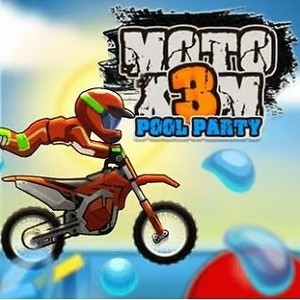
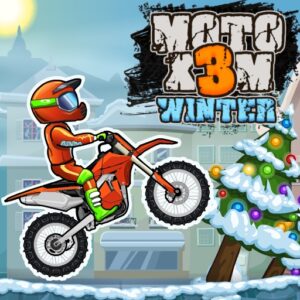
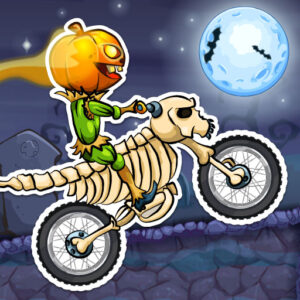
The Moto X3M series, including Moto X3M 6 Spooky Land, Moto X3M 5 Pool Party, Moto X3m 4, and Moto X3m Spooky Land, shows how bike games can become obstacle puzzles without losing speed. These games build around explosive layouts, dangerous drops, moving hazards, and restart-heavy learning. The rider is expected to keep moving, but not recklessly. Timing a jump matters as much as landing it cleanly.
What stands out across the series is how the course itself acts like the opponent. Rather than competing against other riders, players are reading a sequence of traps and timing windows. The spooky stages and pool-themed stages give the same formula different visual identities, yet the core remains consistent: chain jumps correctly, maintain momentum, and avoid losing time through bad landings. That formula has made the series one of the clearest examples of stunt-focused bike design in the tag.
Physics and Creativity in the Free Rider Games
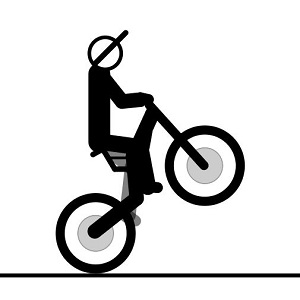
Free Rider 2, Free Rider 3, Free Rider HD, and Free Rider Jumps push the Bike tag toward open-ended physics play. Instead of relying only on preset obstacle courses, these games give players a space where movement and route planning matter in a more flexible way. The emphasis is on experimentation: learning how ramps work, how the bike reacts on uneven lines, and how to connect one stunt section to the next.
This side of the tag has a different kind of replay value than the more linear stunt games. A player is not only reacting to developer-built hazards but also thinking like a course designer. That encourages trial, error, and repeated attempts to refine movement. It also explains why the Free Rider games sit comfortably beside more rigid titles like Bike Racing and Max Dirt Bike 3; all of them involve physics awareness, but the Free Rider entries leave much more room for improvisation.
Terrain Is the Real Opponent in Dirt and Trial Biking
Games such as Max Dirt Bike 3, Icycle, and Kick Buttowski make terrain handling central to the experience. Their difficulty rarely comes from a single mechanic. Instead, players must understand slopes, bumps, gaps, and awkward landings, all while trying to keep the rider stable. The bike is sensitive to the ground beneath it, and that sensitivity is what creates the challenge.
Icycle stands out because its icy setting changes the feel of movement, making control seem slippery and deliberate at once. Max Dirt Bike 3 is closer to classic trial-bike design, where crossing an obstacle is often more important than racing past it. Kick Buttowski shares that obstacle-minded structure, but with a lighter presentation that still relies on careful motion through difficult layouts. These games appeal to players who enjoy solving movement problems one section at a time.
Racing Games in This Tag Usually Reward Adaptation Over Overtaking
Although the Bike tag includes the word racing in titles like Bike Racing, the collection is not centered on traditional head-to-head competition. Even when speed matters, the main test is usually adaptation. Players need to adjust to ramps, slopes, and stunt setups rather than focus on drafting, lane management, or direct opponent contact.
Uphill Rush captures that idea well. The course design asks riders to keep pace while also responding to terrain changes that can interrupt momentum instantly. The same is true of many Moto X3M stages, where the fastest route is often also the most hazardous. In this tag, racing is frequently less about beating another rider and more about mastering the track’s rhythm.
Fast Restarts and Short Learning Loops Shape the Audience
One reason bike games remain popular is that they are easy to understand at first glance but leave plenty of room for improvement. Wheelie Bike teaches a single skill quickly. Bike Racing and Neon Biker expand that into more traditional track control. Free Rider HD and the Moto X3M games then add layers of timing, course reading, and recovery. Across the tag, failure is usually brief and readable, which keeps players trying again.
This structure works especially well for browser play. A short run can be enough to learn something new, and many of these games are built around that repeated attempt cycle. The player gets immediate feedback from a crash, a missed landing, or a failed wheelie, then uses that information on the next run. That loop is a major part of the tag’s appeal, especially for people who like measurable improvement rather than long progression systems.
What the Bike Tag Says About Vehicle Games
Looking across Free Rider 3, Wheelie Bike, Bike Racing, Icycle, Uphill Rush, and the many Moto X3M entries, the Bike tag is less about one type of game than one type of movement problem. Some entries focus on balance alone, some on stunts, some on terrain navigation, and some on creative physics-based route building. The shared thread is control under pressure.
That variety gives the tag broad reach. Players looking for simple balance tests can start with Wheelie Bike or Neon Biker. Those who want harder obstacle timing can move into Max Dirt Bike 3, Kick Buttowski, or Moto X3M 6 Spooky Land. Players who prefer experimentation often gravitate toward Free Rider Jumps or Free Rider HD. The Bike tag succeeds because it lets the same basic vehicle support very different kinds of skill expression.
 Blocky Xtreme
 Road Rage
 BikeBrainrots.io
 Airborne BMX
 Wheel Quest
 Vex X3M 3
 Traffic Rider
 Street Wheelie
 Traffic Road
 Free Rider 3
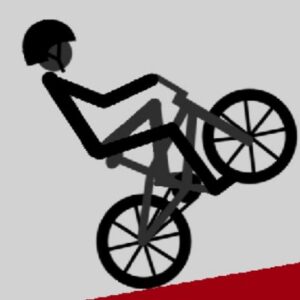 Wheelie Bike
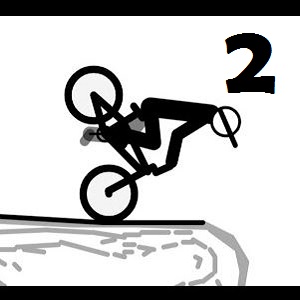 Free Rider 2
 Kick Buttowski
 Max Dirt Bike 3
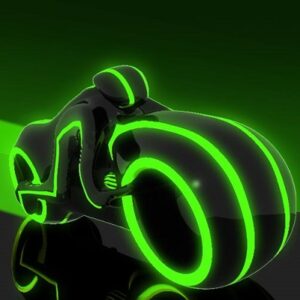 Neon Biker
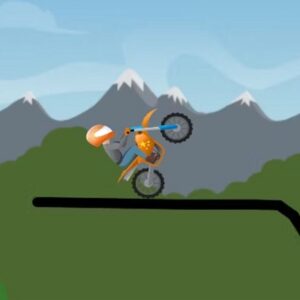 Bike Racing
 Icycle
 Free Rider HD
 Uphill Rush
 Moto X3M 6 Spooky Land
 Moto X3M 5 Pool Party
 Moto X3m 4
 Moto X3m Spooky Land
 Free Rider Jumps
 Moto X3m